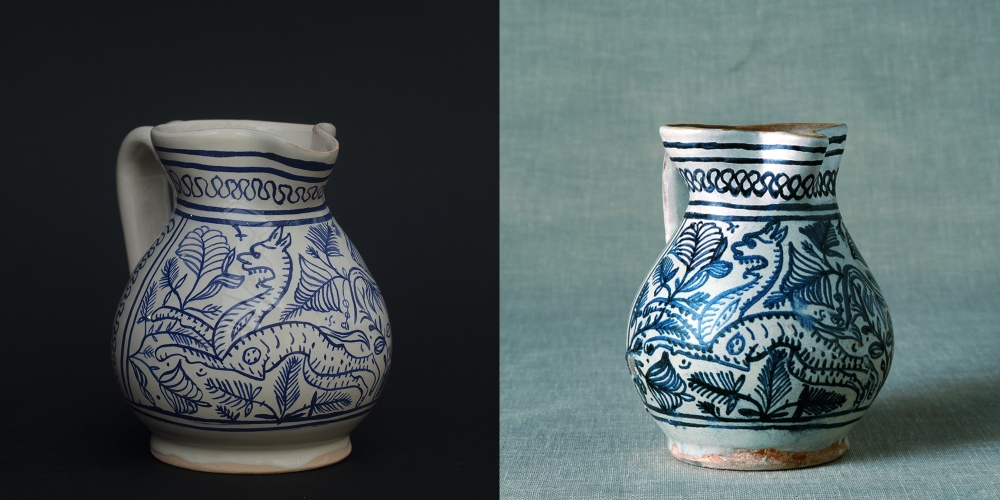
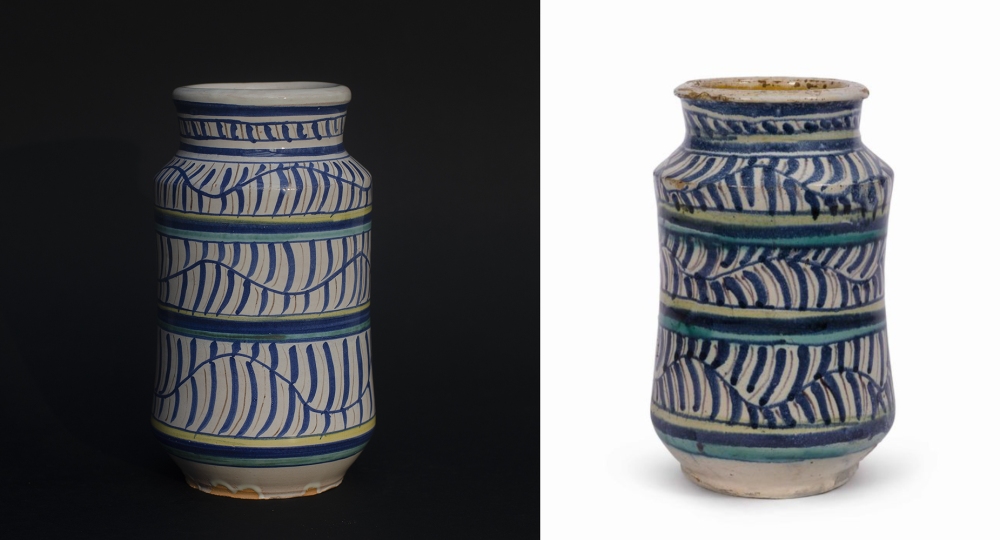
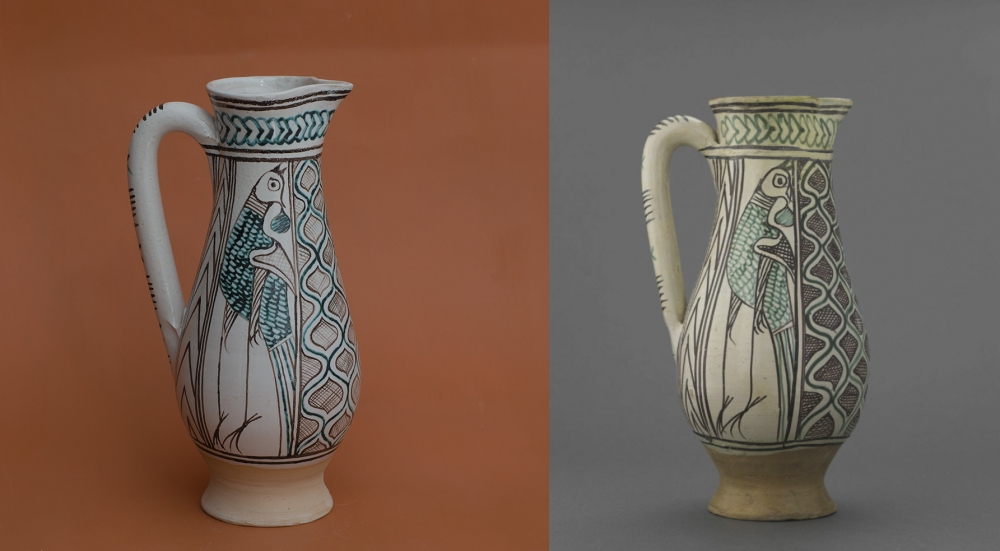
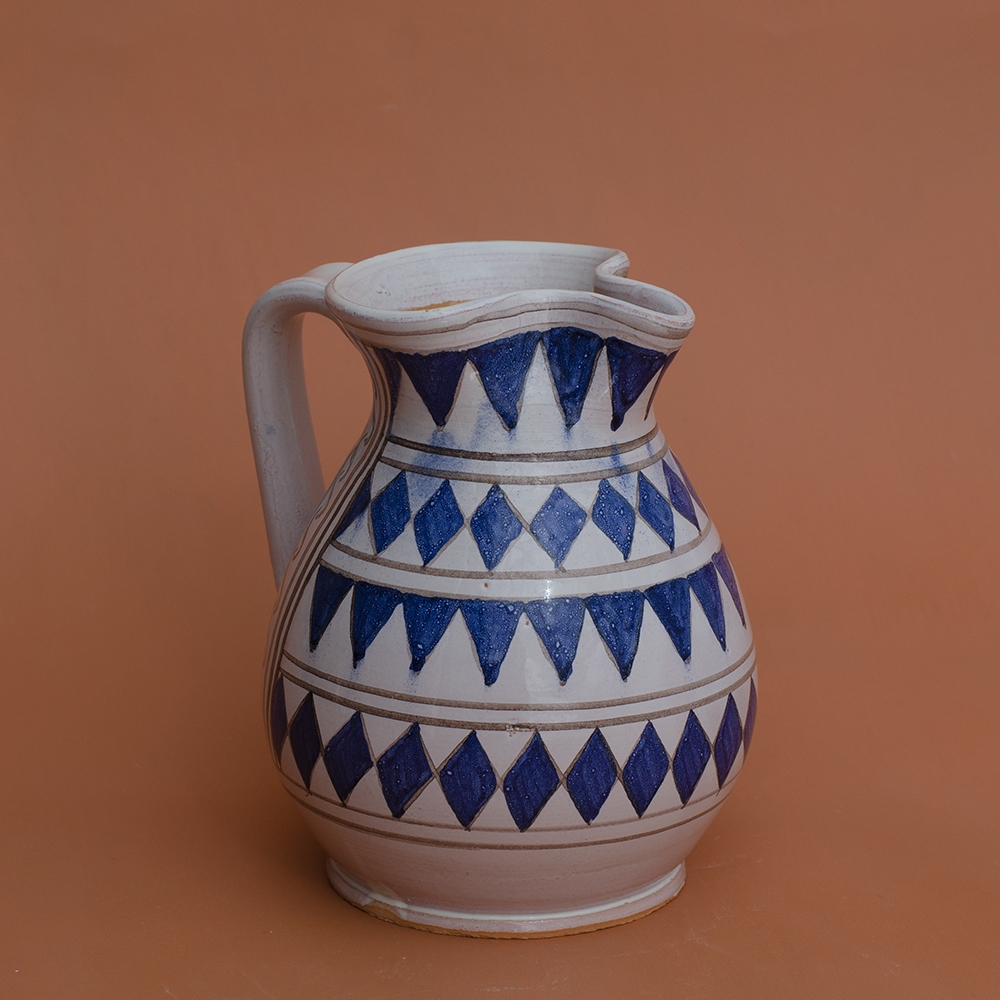
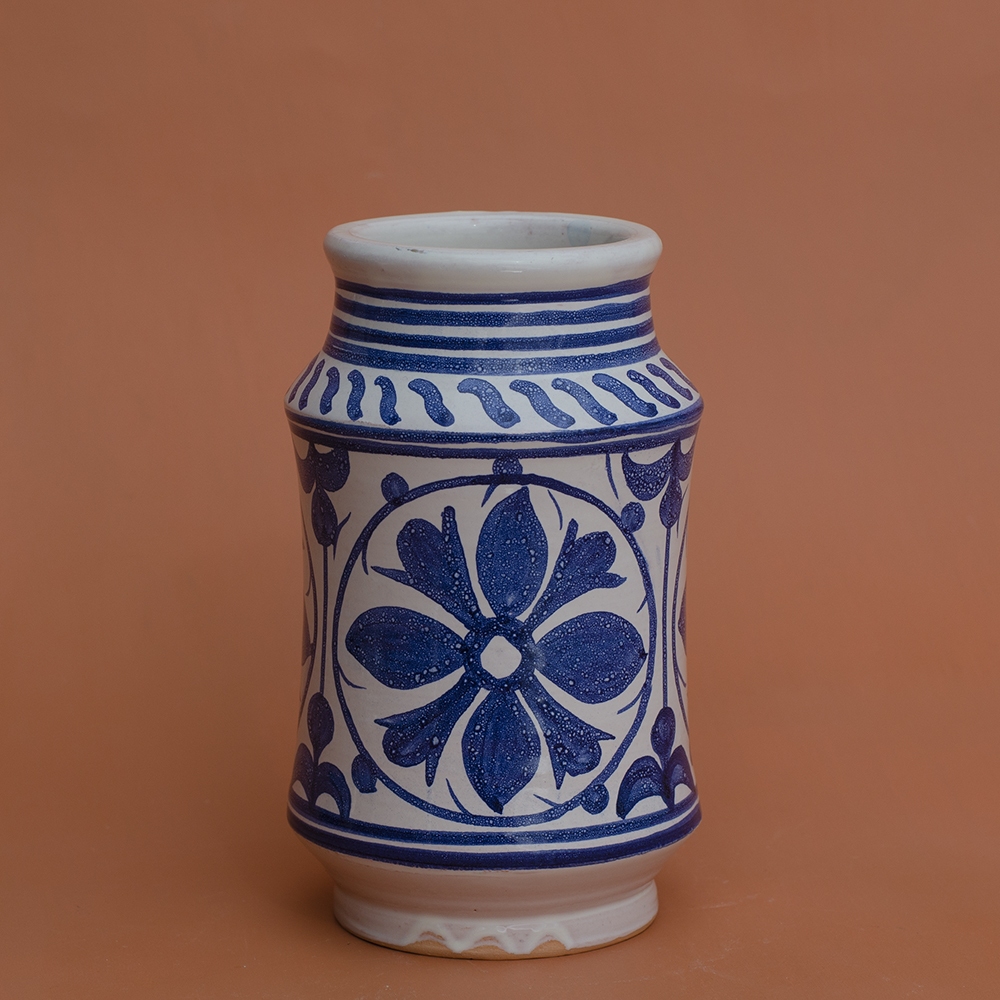
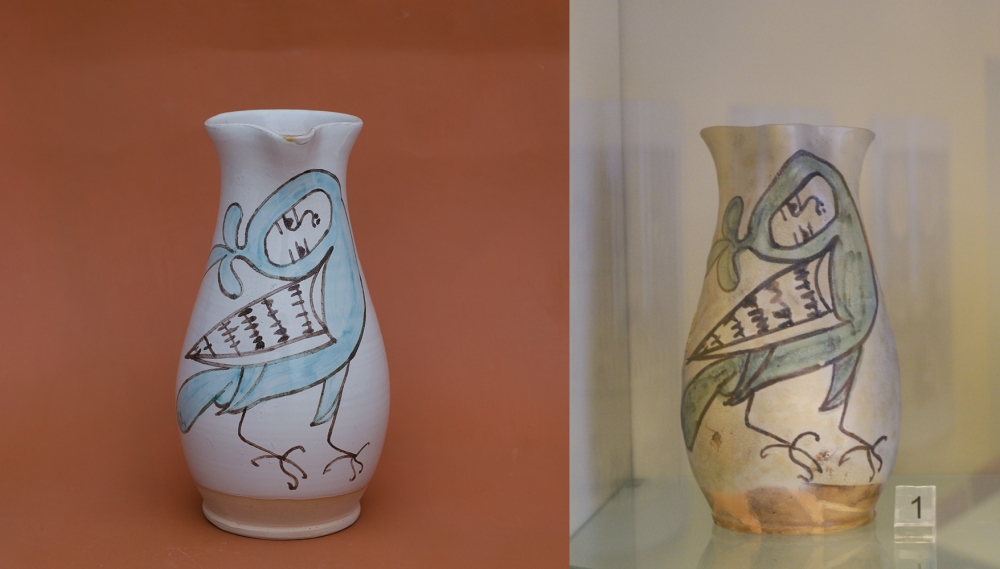
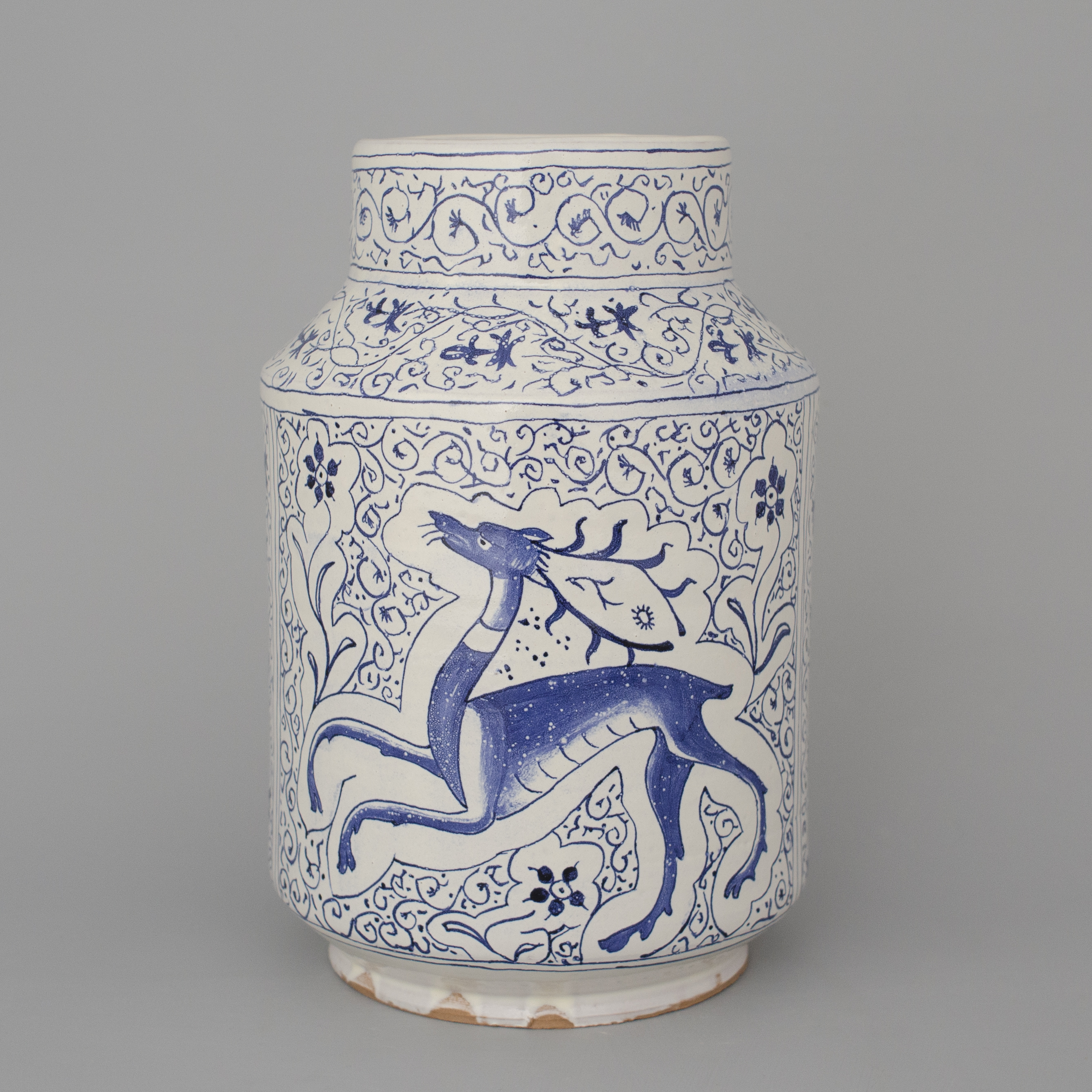
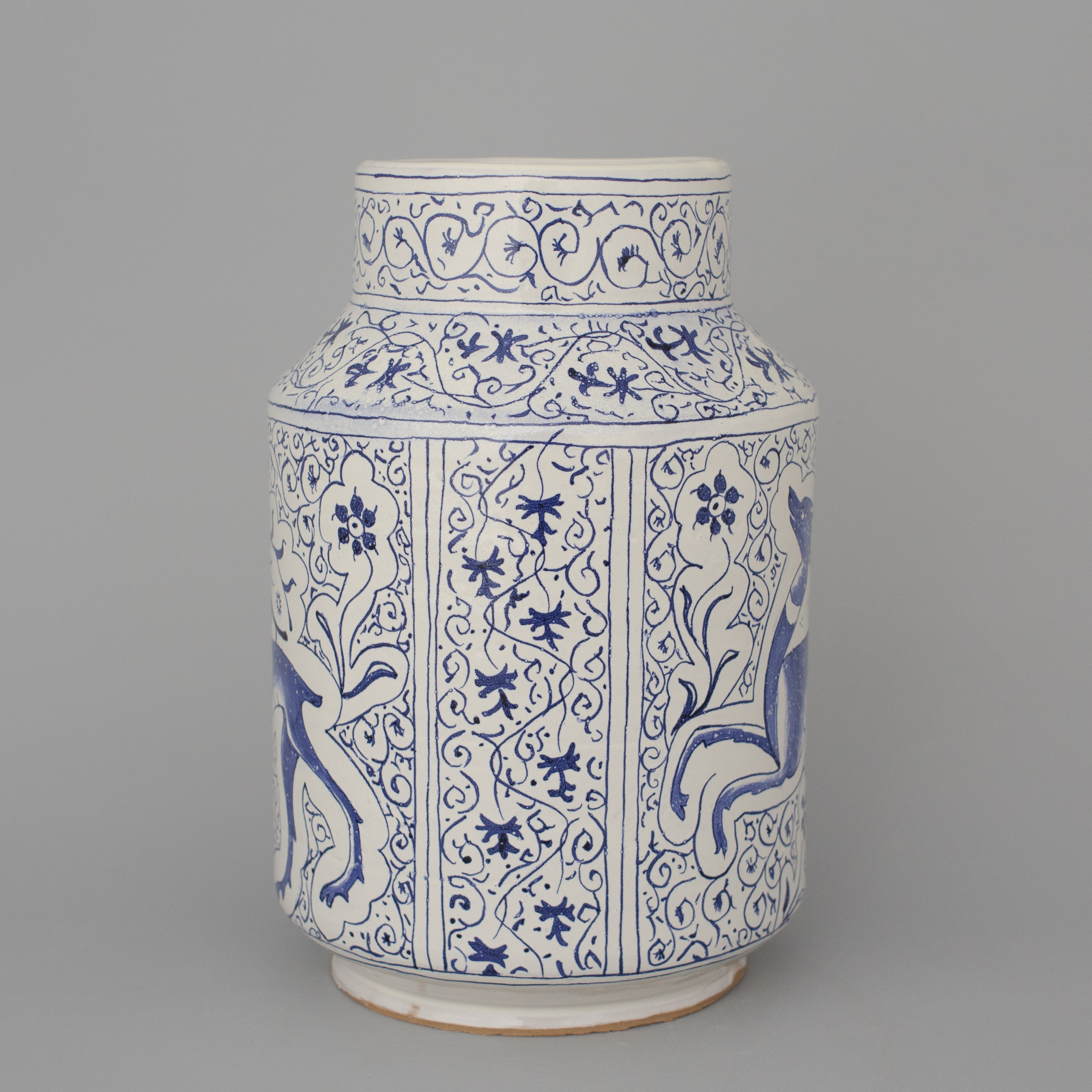
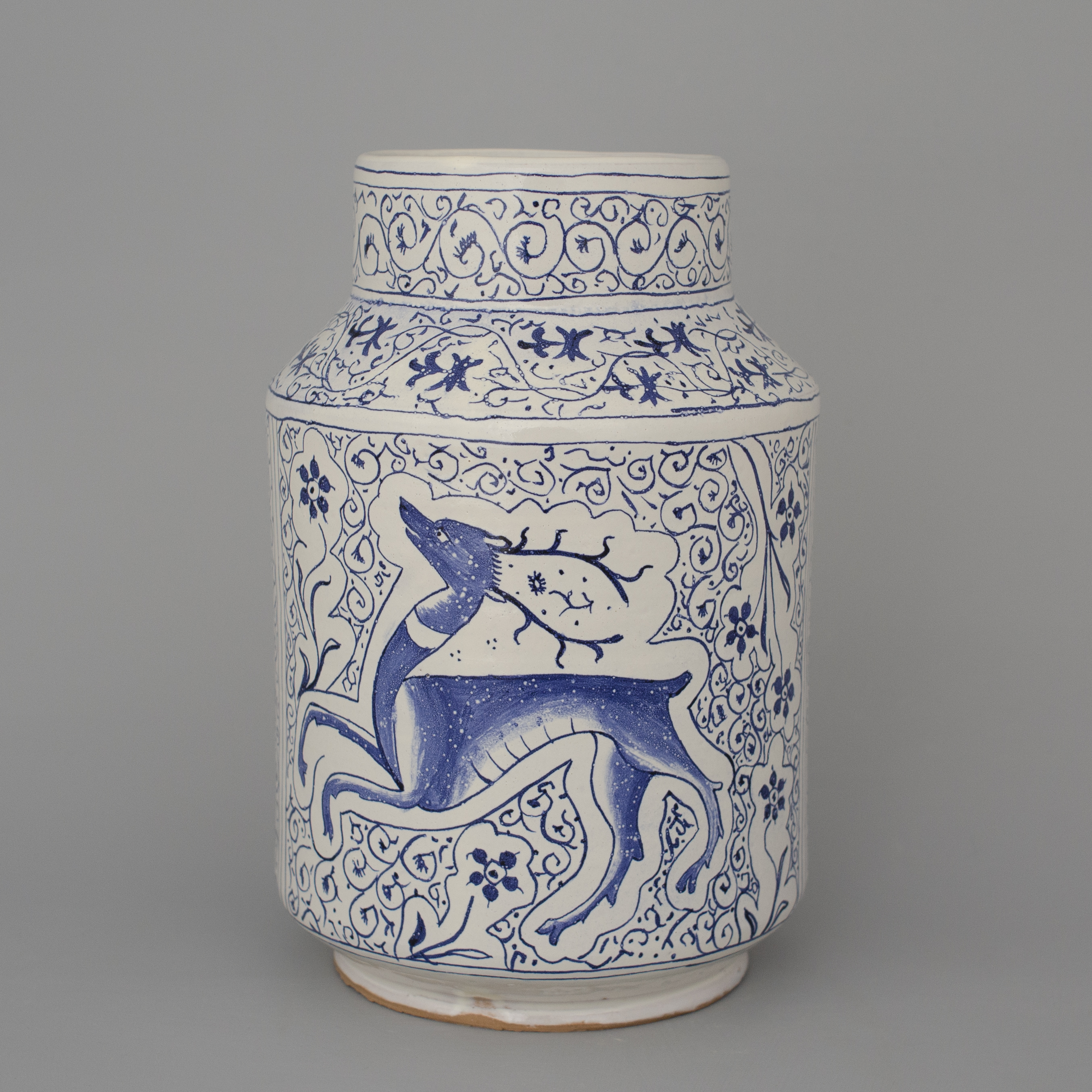
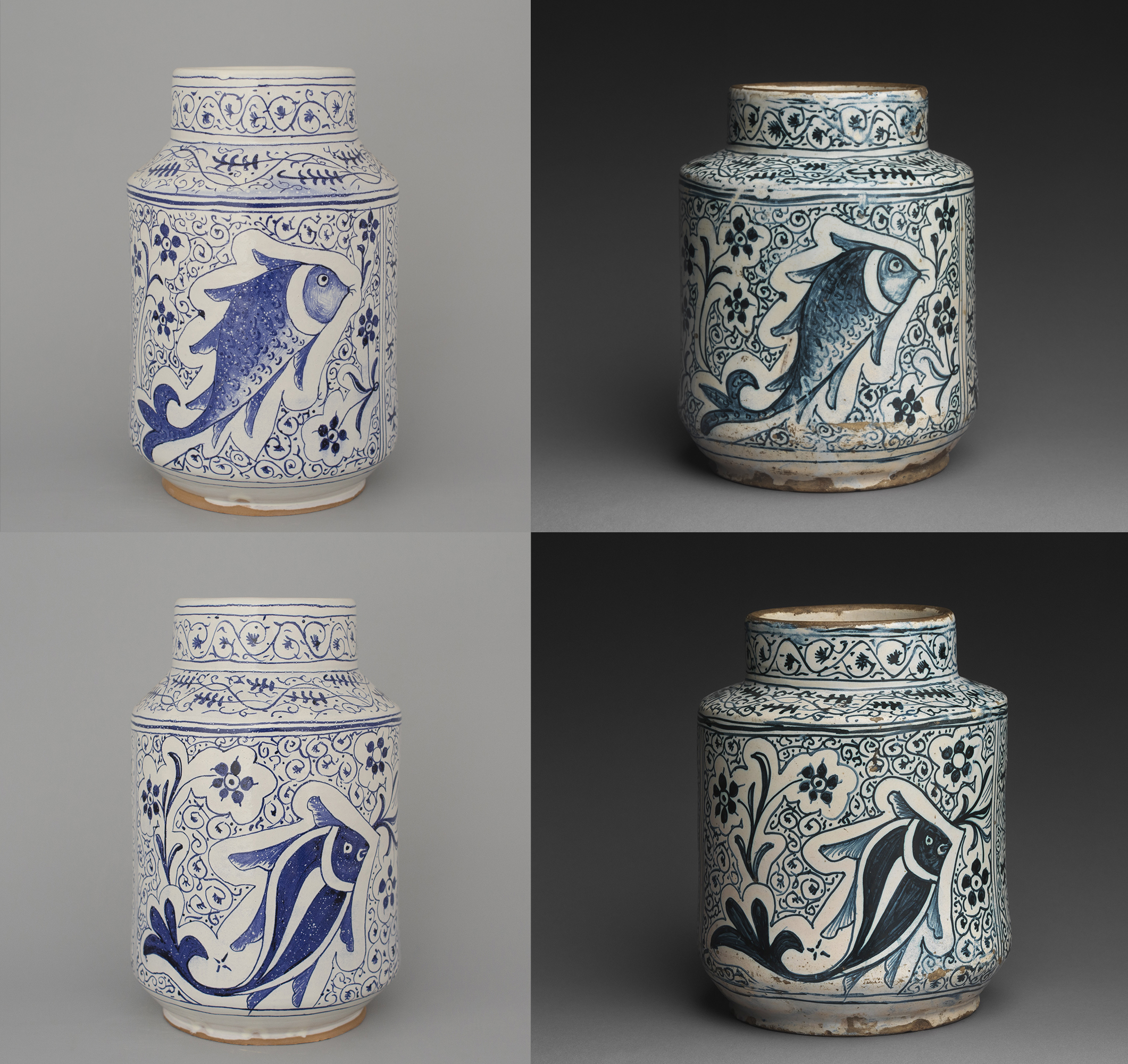
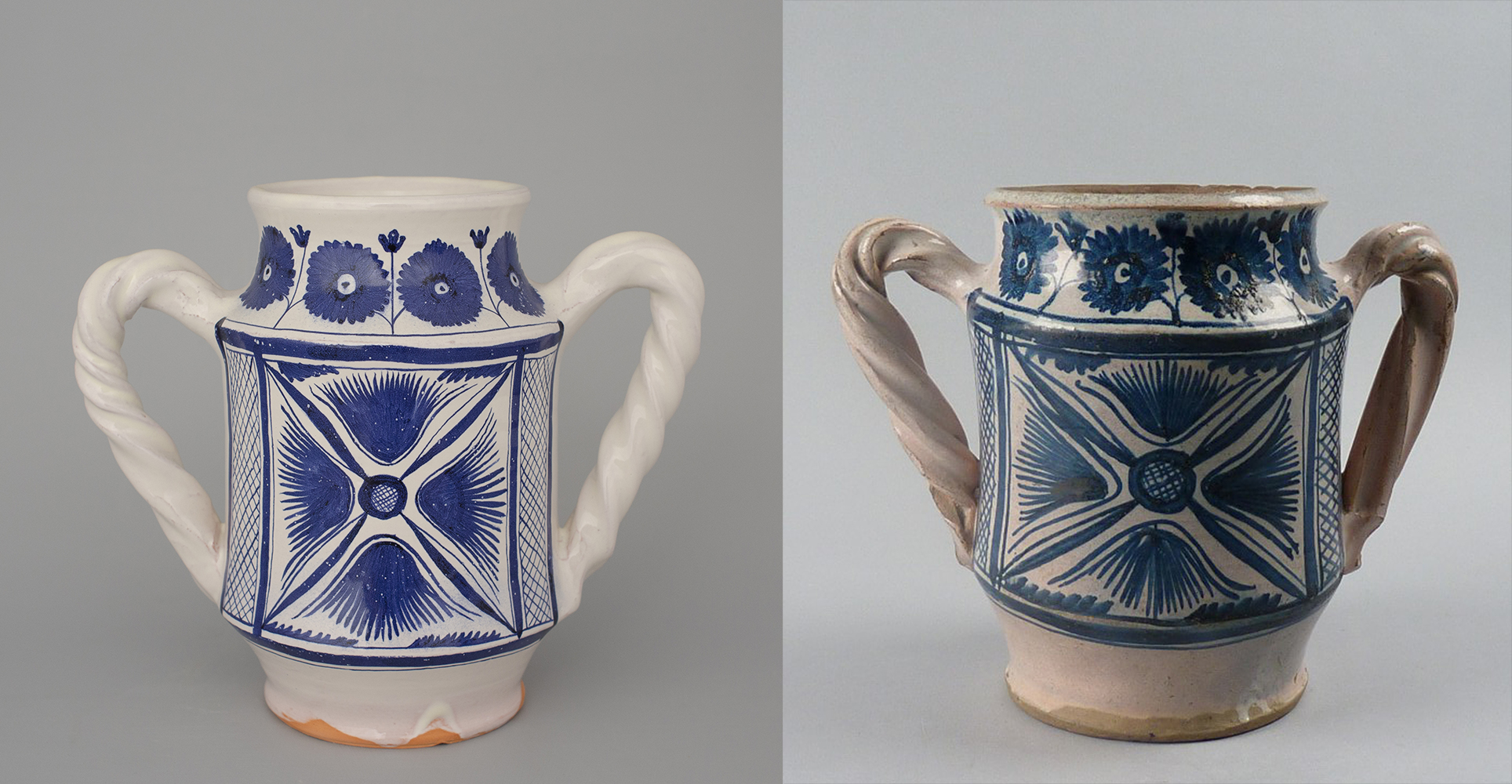
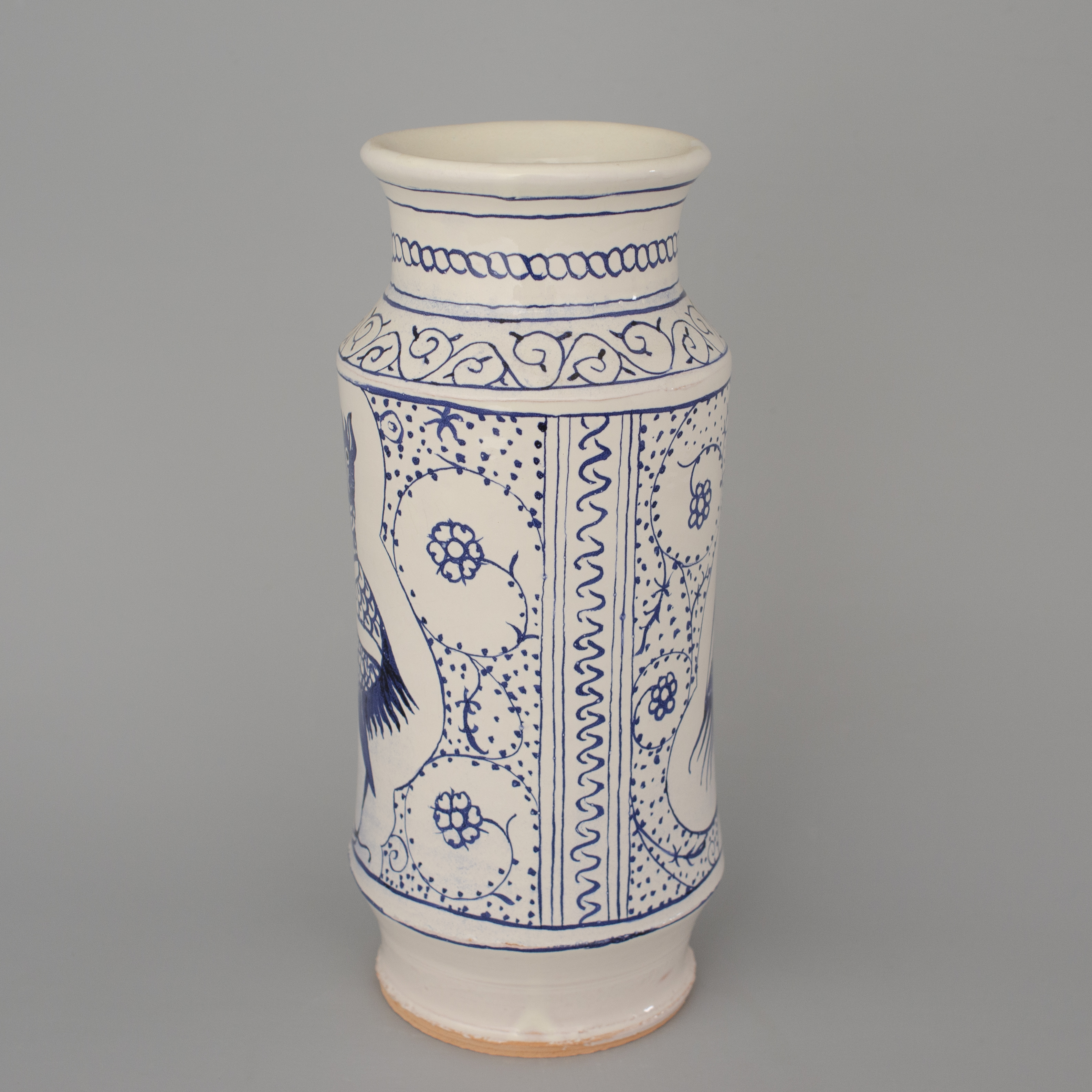
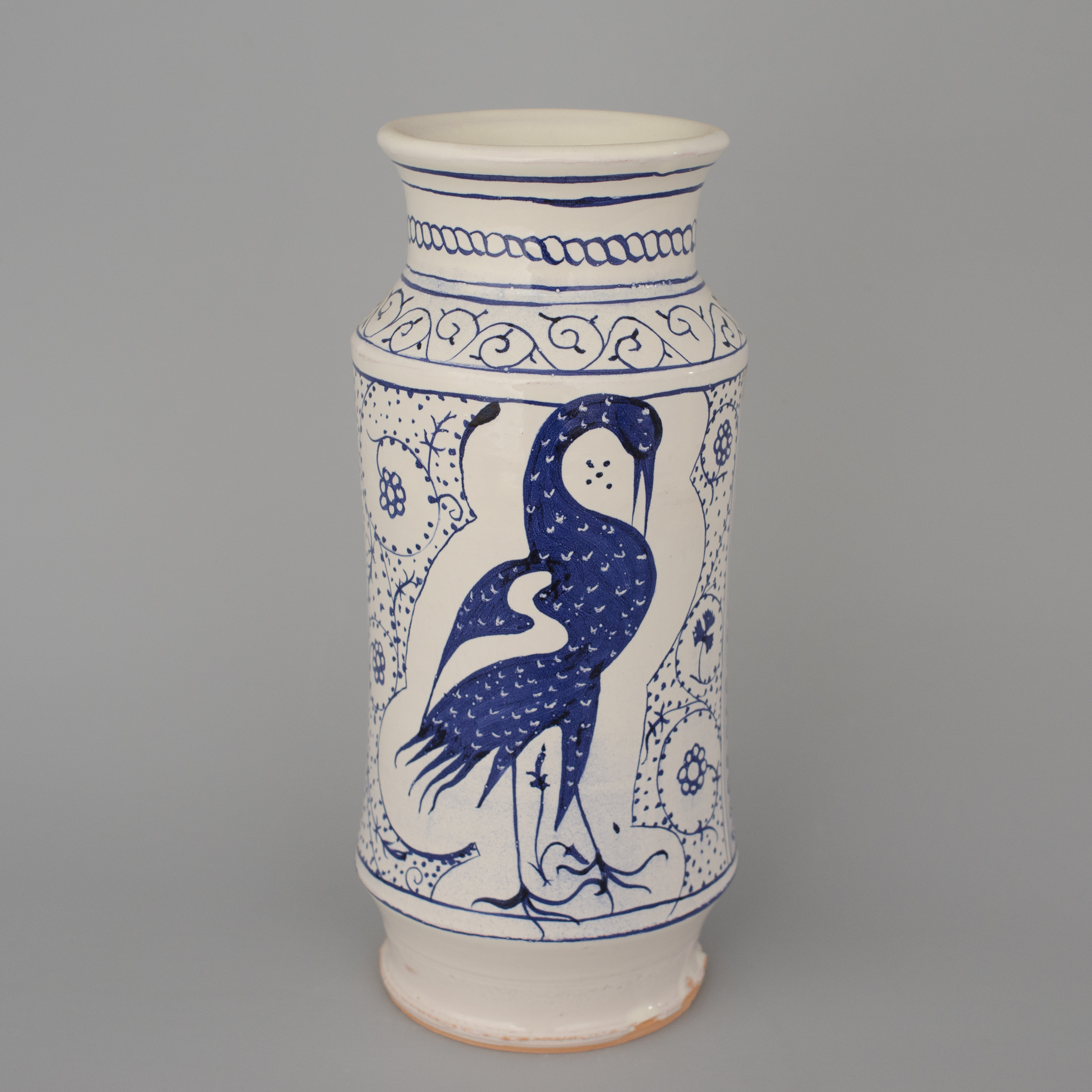
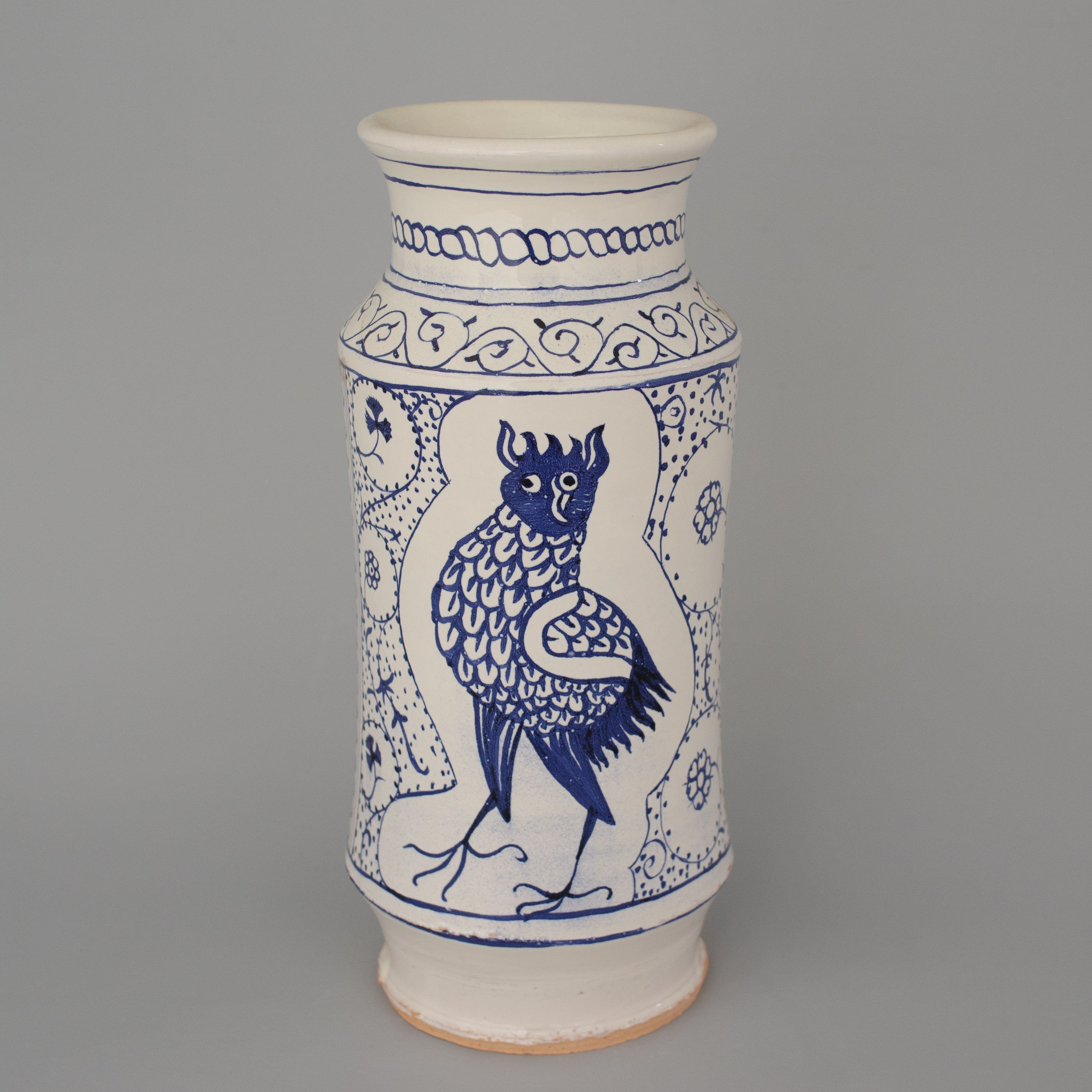
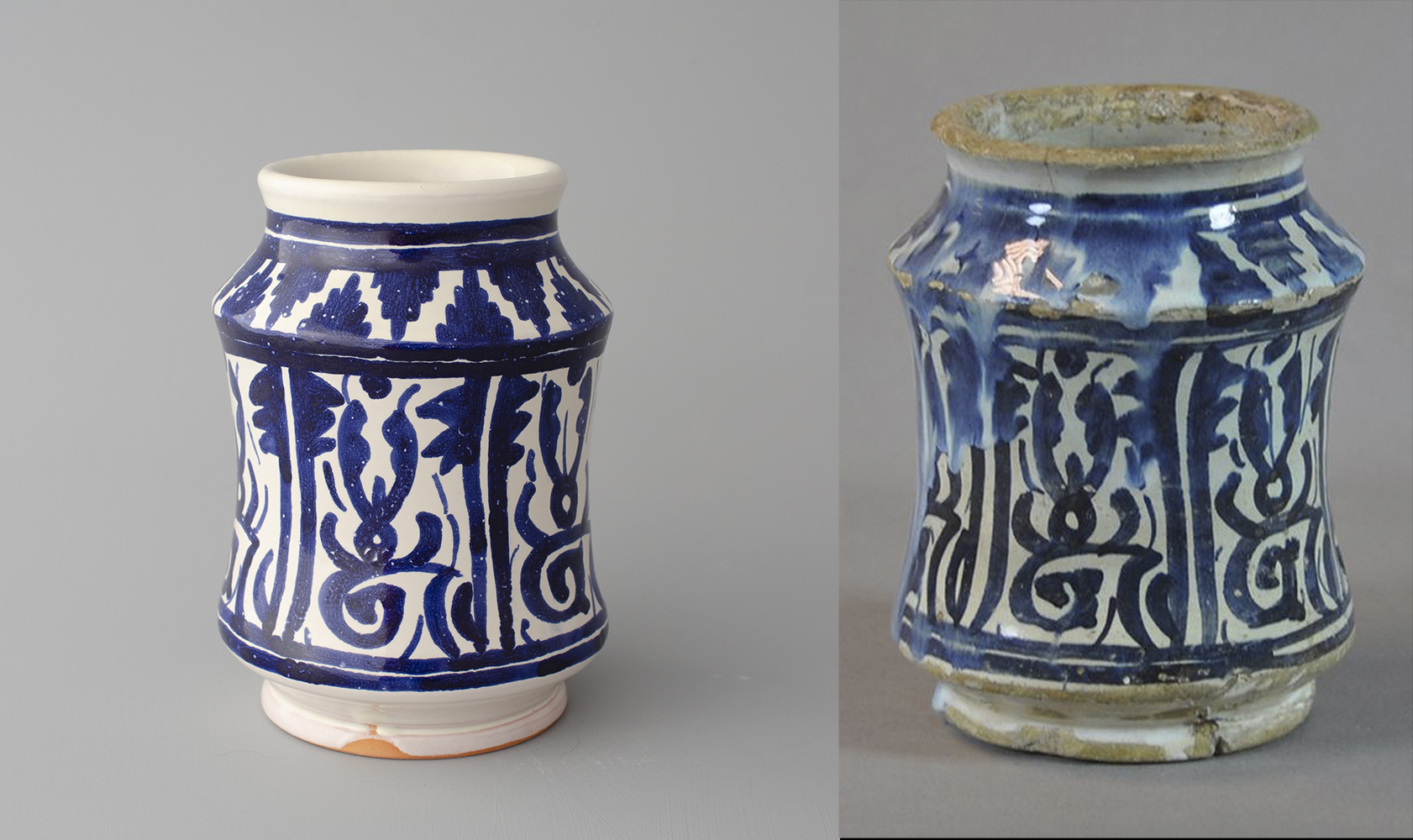
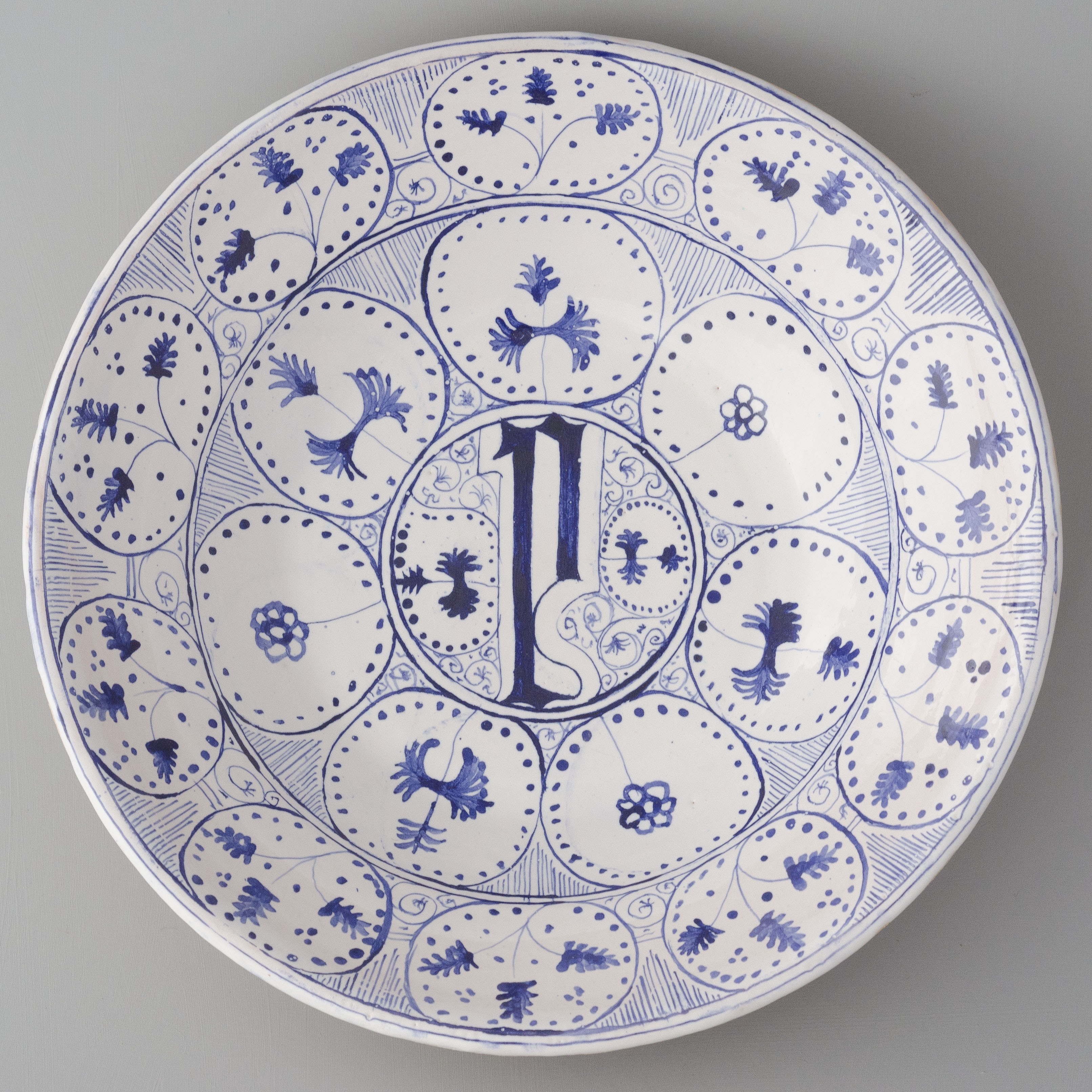
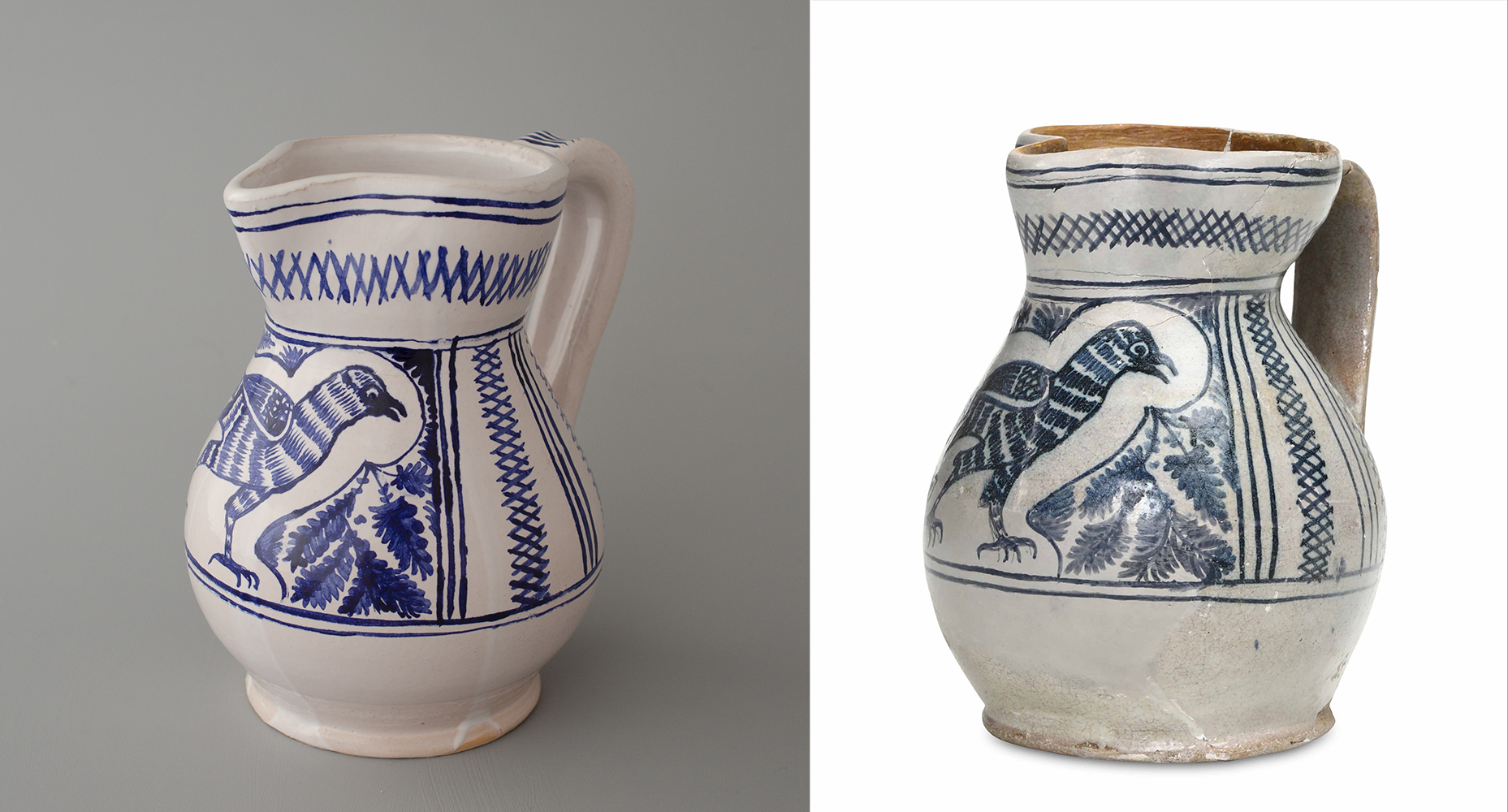
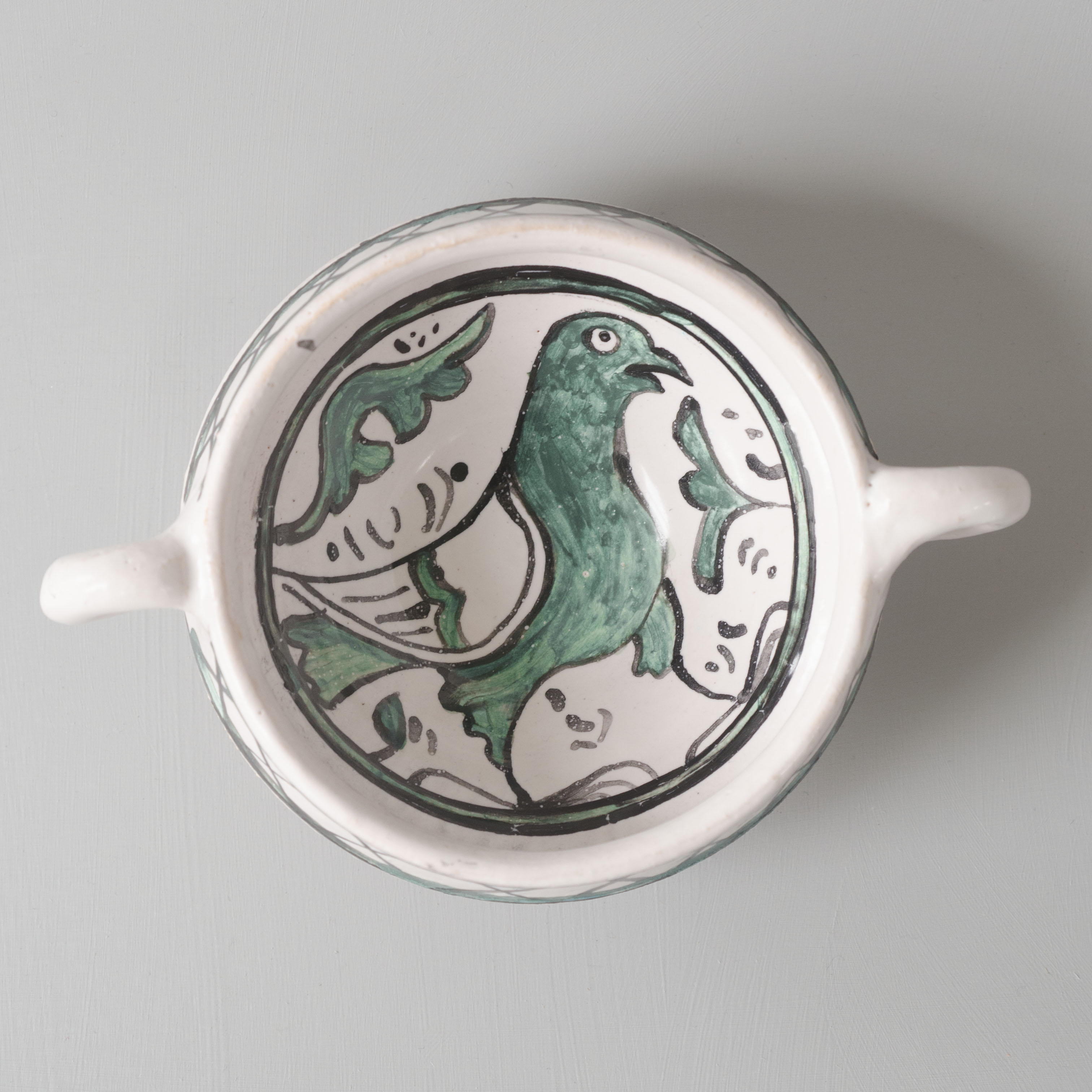
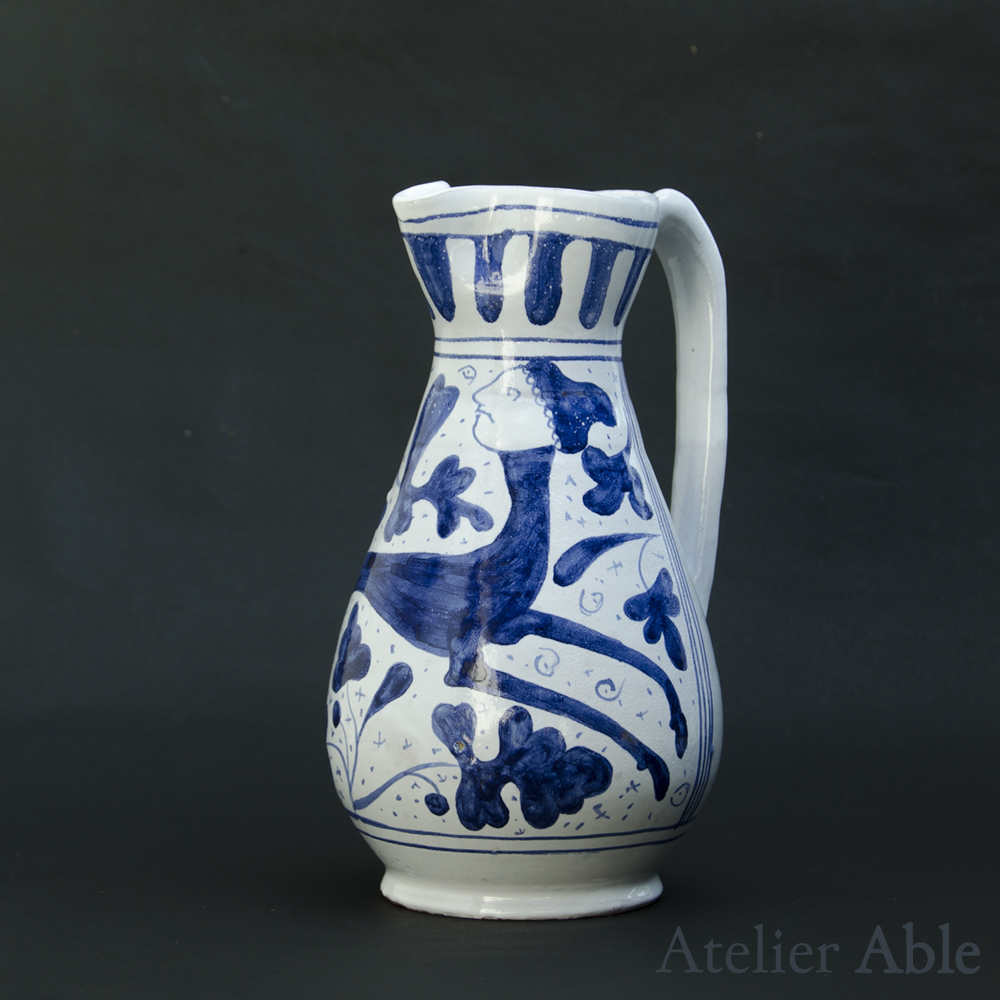
Majolica was first developed in the Middle-East. It’s an earthenware product with a white tin glaze: an ideal ground for metal oxide decorations. In early majolica we often find that cobalt was used for blue, copper for green and manganese for purple. Some majolica in Europe was imported from Arabic countries like Syria but in the 14th century the technique became widely used in both Spain and Italy. Even though majolica was a rare commodity in Germany, the north of France, Flanders and the Netherlands, it often appeared in 15th century paintings, evidence of how much its decorative quality were appreciated. The popularity of majolica would only become stronger in time, resulting in a growing number of majolica workshops opening in cities as far north as Antwerp and Bergen op Zoom in the 16th century, but there is even evidence of majolica tile production in Utrecht as early as the 14th century. Much later, the technique would be adopted by Delft potters, resulting in the famous Delftware.